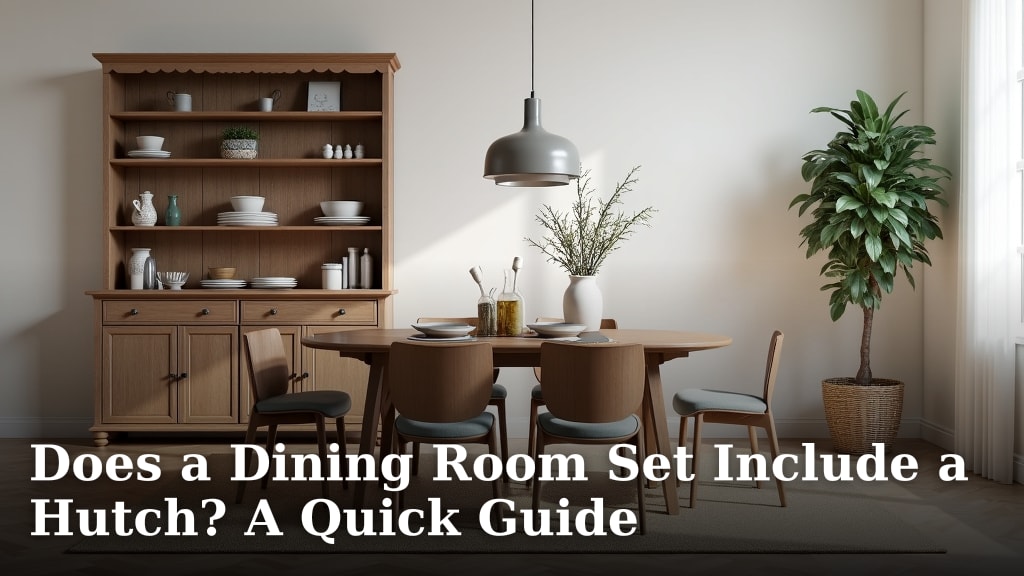
Choose a Dining Room Set with a China Cabinet
Choose a dining room set with a china cabinet by checking cabinet capacity, coordinating the finishes, and measuring room clearance. Make sure doors and drawers can open while people still have space to move around the table.
On this page (8 sections)
- What should you check in a dining room set with a china cabinet?
- How much can a china cabinet hold?
- How can you coordinate the table, chairs, and cabinet?
- How do you measure room clearance before buying?
- Should a china cabinet match the dining table exactly?
- Is a china cabinet the same as a hutch or sideboard?
- What seating works with the set?
- How should you choose a dining room set with a china cabinet?
Choose a dining room set with a china cabinet by checking what the cabinet can hold, how the pieces look together, and whether everything fits with room to move. Measure the table, chairs, cabinet, and the clear space needed to open doors and pull out seats.
A cabinet that looks right in a showroom can feel too large at home. Plan the full footprint before choosing a set, including the cabinet doors and the space people need to pass through.
A dining set may include only the table and chairs, so confirm each piece included in the arrangement. Our guide to what is included in a dining set explains the common differences.
What should you check in a dining room set with a china cabinet?
Check capacity, scale, finish, and clearance before choosing a dining room set with a china cabinet. If you are comparing lower-cost table sets, see dining table sets.
These details determine whether the cabinet suits your dishes and whether the full arrangement works in your room.
Start with the items you plan to store. Then compare your room measurements with the outside dimensions of each piece.
| Check | What to look for | Why it matters |
|---|---|---|
| Cabinet capacity | Shelf count, shelf spacing, usable depth, and any drawer space | Your dishes need to fit without crowding |
| Furniture coordination | Related wood tones, shapes, finishes, and hardware | The pieces should feel connected in the same room |
| Room clearance | Chair pullback, walking paths, and cabinet door swing | People need to sit, serve, and move safely |
| Included pieces | Table, chairs, cabinet, and any other named items | The word “set” can refer to different combinations |
| Delivery path | Doorways, turns, stairways, and final placement | Large furniture must reach the room |
Check the package contents by piece name. A table-and-chair set does not automatically include a china cabinet, hutch, or sideboard.
Read does a dining room set include a hutch? if you are comparing those terms.
How much can a china cabinet hold?
A china cabinet holds what fits its usable shelf space, not what its exterior size might suggest. Compare the cabinet’s interior dimensions with your dishes, serving pieces, and glassware.
Make a short inventory before shopping. Include plates by size, bowls, mugs, glasses, serving platters, and any pieces you want displayed.
Measure the tallest items, such as pitchers or stemware, and the widest ones, such as platters. Check each shelf’s clearance and depth so you can remove items without catching them on the frame or another shelf.
Think about how often you use each item. Frequently used pieces work best where you can reach them easily, while display pieces can go higher if the cabinet allows it.
Do not assume all shelves adjust. Confirm which shelves move, whether they have fixed positions, and any stated weight guidance.
If a cabinet has drawers, check their dimensions too; they can suit smaller serving tools or linens that do not belong on open shelves.
A glass-front cabinet can make displayed dishes visible, but it still needs practical access. Leave space in front for the doors to open and for someone to stand while taking out a plate.
How can you coordinate the table, chairs, and cabinet?
Coordinate the pieces through one or two shared details, such as finish, shape, or hardware. Matching every surface exactly is optional, but big differences in scale or style can make the room feel disconnected.
Wood tones can vary between brands and finishes. If you can, compare samples in the room, where daylight and ceiling lights affect how colors appear.
Look at the table and cabinet together from the main entrance to the dining area. Consider the table’s shape, leg style, and visual weight alongside the cabinet’s height and door design.
Chairs can bridge a table and cabinet with a related finish or upholstery color. For example, the Berringer chair pair has a rustic brown finish, spindle backs, and cushioned microfiber seats.
Use those details as a coordination reference if similar chairs suit your table and room.
A lighter, more open chair can keep a smaller room from feeling crowded. The Giantex 5 Piece Dining Table Set combines a glass tabletop with four armless chairs, so it may suit a room where a visually open table is a priority.
For another chair style, the Hammis dining chair pair has a rake back, dark brown finish, and cushioned faux leather seats. Compare its finish and silhouette with the cabinet before using it to complete a coordinated arrangement.
How do you measure room clearance before buying?
Measure the room with every piece in its planned position, then account for chair movement, walking paths, and cabinet doors. A floor plan or tape outline helps reveal tight spots before delivery.
- Measure the room’s length and width, noting doors, windows, vents, and fixed furniture.
- Mark the table’s full footprint, including any extension leaves you expect to use.
- Mark where chairs sit when tucked in and when pulled out for someone to sit.
- Add the cabinet’s footprint and mark the direction its doors open.
- Trace the main path between the room entrance, table, and nearby rooms.
- Check that drawers and cabinet doors can open without hitting chairs, walls, or other furniture.
Do not measure only the empty area between the walls. A chair pulled back from the table or a cabinet door opened for serving can take up space people use to walk through.
Try the layout with painter’s tape or cardboard outlines. Walk through the paths and pretend to open cabinet doors and sit down; adjust the placement if the route feels blocked.
Measure the delivery route as well as the room. Check narrow doorways, corners, stairs, and turns between the entrance and dining area.
Ask about each item’s assembled dimensions and whether it requires assembly in the room.
Should a china cabinet match the dining table exactly?
A china cabinet does not have to match the table exactly, but the pieces should share a clear visual connection. Similar wood tones, hardware, shapes, or design details can make separate pieces look intentional together.
A close match in color can still look different if the finishes have different sheen or undertones. If the exact finish is unavailable, choose a deliberate contrast and repeat its color or material elsewhere in the room.
Consider how much visual weight the cabinet adds. A tall, dark cabinet can dominate a compact dining area, while a lower or lighter piece may leave the room feeling more open.
Use the rest of the room to connect different finishes. A rug, light fixture, or table linens can repeat a tone from the cabinet or chairs without making all furniture identical.
If you prefer a changing look, compare trending dining room sets with timeless dining room sets before settling on a style. Both approaches can work; choose the one that fits your room and the furniture you expect to keep.
Is a china cabinet the same as a hutch or sideboard?
A china cabinet, hutch, and sideboard can all provide dining storage, but their shape and storage layout can differ. Check dimensions and included components instead of relying on a name alone.
A china cabinet often uses shelves behind doors for dishes or glassware. A hutch may combine an upper display section with lower storage, while a sideboard is generally a lower cabinet that can provide a serving surface.
Names are not used consistently across furniture collections. Compare height, shelf layout, doors, drawers, and intended placement to find the piece that suits your room.
For a wider look at dining-room storage choices, read buffets and sideboards. If you already have a china cabinet and want to arrange its contents, see how to decorate a china cabinet.
What seating works with the set?
Choose chairs and benches by how many people you seat, how the pieces fit under the table, and how much room remains when they are in use. Check seat height and table clearance before adding seating.
A bench can add flexible seating on one side, but it needs room to slide in and out. Read does a dining set include a bench? to check whether one is part of a set.
A table with four chairs can be sold as a complete set, but the term depends on how a seller defines the package. Our guide to whether a table and 4 chairs are considered a set covers what to confirm.
Match seating to the table’s scale. A large cabinet can make slim chairs look undersized, while bulky chairs can crowd a compact table.
Keep the chair style related to the cabinet without making every piece identical.
How should you choose a dining room set with a china cabinet?
Choose a dining room set with a china cabinet by starting with the dishes you need to store, then confirming the room can fit the table, seats, and cabinet together. Pick related finishes and shapes that suit the space you have.
If storage is the priority, compare shelf dimensions and access first. If the room is compact, map chair movement and door swings before choosing a cabinet size.
Use the same checks when comparing a table-and-chair set with separate storage pieces. Confirm the included items, measure the full layout, and make sure the style works with furniture you already own.
Frequently asked questions
Does a dining room set with a china cabinet include the cabinet?
Not always. A dining set can mean only a table and chairs, while a china cabinet, hutch, or buffet may be sold separately or included in a larger package.
Check the included pieces by name, and see our guide to what is included in a dining set before you compare options.
How much clearance should I leave around a dining table?
Measure the room with the table and cabinet in place, then allow room to pull chairs out and walk behind seated guests. The needed space depends on your furniture and how people use the room, so mark the table, chair positions, cabinet doors, and main walking paths on the floor before buying.
How do I coordinate a china cabinet with a dining table?
Start with one shared detail, such as a wood tone, finish, shape, or hardware color. The pieces do not need to be identical, but their scale and style should feel related.
Compare samples in your room's light when possible, since nearby finishes can look different at home.
What should I store in a china cabinet?
Use a china cabinet for items you want organized and easy to see, such as dinnerware, serving pieces, or glassware. Check shelf spacing, depth, and weight guidance against your own items.
Keep frequently used pieces on reachable shelves and leave enough room to remove them safely.