Tablecloth Buying Guide
Choose a tablecloth by measuring the tabletop, adding twice your desired overhang, and matching the fabric to how you use the table. Then consider shape, care, spill protection and whether a runner or placemats will work better.
On this page (8 sections)
- How do you choose a tablecloth size?
- Which tablecloth fabric suits your routine?
- Do waterproof tablecloths protect a table from spills?
- Should you use a tablecloth, runner, or placemats?
- Which table linens complete a place setting?
- How do you care for and store tablecloths?
- Explore table linens & protectors by topic
- Which tablecloth should you choose?
A tablecloth is the simplest way to cover a tabletop, soften a dining space, and catch everyday crumbs. Measure the table, add twice the drop you want, then choose a fabric and finish that fit your meals and cleanup routine.
The right choice depends on the table’s shape and the job the cloth needs to do. A washable everyday cover, a fitted event cloth, and a decorative linen each solve different problems.
This guide covers sizing, fabric, spill protection, table runners, napkins, placemats, coasters, and care. If you are furnishing a smaller room, our apartment size dining set guide can help you match the table and linens to the available space.
How do you choose a tablecloth size?
Add twice your desired drop to the tabletop’s length and width. For example, a 10 in drop needs 20 in added to each measurement, because the cloth hangs over both sides.
Measure the tabletop itself, not the full table including leaves you do not plan to use. If the table expands, measure each setup and decide whether you want one cloth for the largest size or separate cloths for each arrangement.
| Table shape | What to measure | Sizing method |
|---|---|---|
| Rectangle | Length and width | Add twice the desired drop to both measurements |
| Square | One side | Add twice the desired drop to each side |
| Round | Diameter | Add twice the desired drop to the diameter |
| Oval | Long and short diameters | Add twice the desired drop to both |
The finished cloth dimensions should be larger than the tabletop. Check whether the maker lists the cloth’s actual size, and allow for any difference between the stated size and the finished hem.
A shorter drop looks casual and leaves more leg room. A longer drop creates a more formal look, but it can catch knees, chair arms, or children’s hands.
For help choosing a length that suits your setup, see how long a tablecloth should be.
How much overhang should a tablecloth have?
A 6 to 10 in drop on each side is a practical starting point for everyday dining. A shorter drop can work well on a small kitchen table, while a longer drop can suit a formal meal if it stays clear of people’s laps.
Measure from the tabletop edge straight down, rather than guessing from the cloth’s overall dimensions. If the table has a thick apron, check that the cloth can hang without pressing against chair arms or blocking drawers.
For a card table, measure the top and consider how the cloth will sit while people are seated and moving around it. Our guide to the best tablecloth for a card table focuses on that compact setup.
What size tablecloth works for a round or oval table?
For a round table, measure its diameter, then add twice the desired drop. A 48 in round tabletop with a 10 in drop calls for a cloth about 68 in across.
Oval tables need two measurements: the long diameter and the short diameter. Add twice the drop to each, then look for an oval cloth in a suitable size; a rectangular cloth may leave uneven corners or excessive fabric.
See our guides to the best tablecloth for a round dining table and the best tablecloth for an oval dining table for shape-specific options.
Which tablecloth fabric suits your routine?
Choose fabric based on how often you wash it, how formal the table should look, and how much spill protection you need. Cotton and linen have a natural texture, polyester is often chosen for easy care, and stretch blends can stay snug on event tables.
Fabric names alone do not tell you how a cloth will behave. Check the care instructions, coating, weave, and whether the cloth is intended for indoor or outdoor use.
| Material or finish | Consider it for | Check before buying |
|---|---|---|
| Cotton | A familiar, washable table covering | Shrinkage and ironing needs |
| Linen or cotton-linen | A textured, relaxed table setting | Wrinkles and care instructions |
| Polyester | Easy-care dining or event use | Fabric feel and heat guidance |
| Stretch polyester blend | A fitted cover for events | Exact table dimensions and leg fit |
| Coated fabric | Splash protection | Whether spills must be wiped promptly |
If you prefer natural fibers, our guide to cotton tablecloth fabric explains what to compare. For coated options, see how to choose waterproof tablecloth material.
Is cotton or linen better for a tablecloth?
Cotton and linen can both suit dining tables, but the best choice depends on the texture and care you want. Cotton is familiar and often machine washable; linen has a relaxed, textured look but may show wrinkles more readily.
Blends combine fibers, so read the material details rather than assuming a cotton-linen cloth has equal amounts of each. For a larger event or a coordinated set, compare the best bulk linen tablecloth options.
Is polyester a good choice for a tablecloth?
Polyester can be a practical choice if you want a cloth with simple care instructions or a smoother look. Some polyester cloths are wrinkle resistant or stain resistant, but those terms do not mean they cannot crease or mark.
Check the stated wash and drying guidance, especially for embroidered or hemstitched designs. A specific example is the Chassic 60 x 84 in polyester cloth, which is described as wrinkle resistant and machine washable.
For a white option, our best white rectangular tablecloths guide narrows the choices by shape and color.
When does a fitted tablecloth make sense?
A fitted or stretch tablecloth can help keep fabric close to the table during a party or buffet. Check the table’s length, width, height, and leg layout, since a snug fit depends on all of them.
The IVAPUPU set includes two black stretch covers sized for 6 ft rectangular tables. Its four-way stretch fabric and foot covers are intended to hold the cloth in place, making it a practical format to consider for event tables.
For more options, see our best fitted tablecloths with elastic. If you want a cover that resists creasing in storage, compare best wrinkle resistant tablecloths.
Do waterproof tablecloths protect a table from spills?
A waterproof coating can help with splashes, but wipe spills promptly unless the care guidance says otherwise. Coatings vary, and a cloth that resists a splash may not stop liquid from seeping through if it pools.
The Laolitou and JIALE cotton-linen examples have an additional coating and are described as splash-proof. Laolitou specifically advises wiping the surface dry in time, so treat the coating as a helpful layer rather than a reason to leave spills sitting.
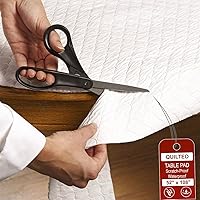
A separate pad or protector can add coverage beneath a tablecloth. Compare best table pads for dining tables and best dining table protectors if safeguarding the tabletop is a priority.
For outdoor dining, consider sunlight, wind, and cleanup as well as water resistance. Our guide to best outdoor waterproof round tablecloths covers one common patio setup.
Should you use a tablecloth, runner, or placemats?
Use a tablecloth for full coverage, a runner for a central strip, and placemats for individual place settings. You can layer them, but first decide which surface needs protection and how much of the tabletop you want visible.
A runner can protect the center from serving dishes while leaving the table edges exposed. Measure its width so it does not crowd place settings, and decide whether you want the ends to hang over the table.
Our guide to best table runners for dining tables compares styles, while fabric for a table runner explains material choices. Seasonal settings may call for best Christmas table runners.
Placemats are easy to move and can define each seat. Check the material’s care and heat guidance before placing hot dishes on it; see best placemats for dining tables and best heat resistant placemats.
A coaster protects a small area under a glass or mug, while a placemat covers a broader spot. Many coasters are about 3 to 4 in across, but measure your drinkware base if you need a close fit.
If you enjoy making your own table accessories, try how to make coasters.
Which table linens complete a place setting?
Cloth napkins add a reusable fabric layer, while a coordinated set can make color matching easier. Choose napkins based on the number of seats, wash routine, and whether you want them to match the tablecloth or contrast with it.
For everyday use, buy enough napkins for a normal meal cycle plus a few spares. Compare best cloth dinner napkins and best bulk cloth napkins if you need multiples.
A coordinated bundle can reduce guesswork when the tablecloth and napkins share a color or pattern. See best tablecloth and napkins sets, or learn how to make cloth napkins if you want to sew your own.
Napkin holders can keep folded cloths together between meals. If you are deciding whether they fit your table routine, read whether people use cloth napkins and holders.
How do you care for and store tablecloths?
Follow the cloth’s care label and clean spills before they set. Separate fabrics by care needs, and check whether embroidery, fringe, coating, or stretch material changes the wash or drying instructions.
A washable cloth still benefits from prompt cleanup. Blot food or liquid first, then use the recommended cycle and temperature; avoid bleach unless the care guidance allows it.
Fold a fully dry cloth before storing it to reduce the chance of musty odors. If creases matter for your setting, choose a wrinkle-resistant fabric or plan time to iron according to its care instructions.
Store tablecloths away from direct sunlight and sharp objects that can snag the weave. Keep seasonal cloths with their matching runners or napkins so the set is easy to find.
For children’s crafts or party activities, a write-on or color-on cover may be more practical than a formal dining cloth. Explore tablecloths you can write on and tablecloths you can color on.
Explore table linens & protectors by topic
- Best Dining Chair Covers
- Best Dining Set Covers
- Best Fitted Tablecloths with Elastic
Which tablecloth should you choose?
Pick the cloth that fits your measured table and your usual cleanup routine. Choose cotton or linen for a natural texture, polyester for straightforward care, a coated cloth for splash resistance, or a fitted stretch cover for event tables.
For everyday dining, start with a washable cloth and a modest drop. For parties, confirm the table size and consider a fitted cover or a cloth made for the occasion, such as our best tablecloths for birthdays.
If you want to compare general dining options, see best dining tablecloths. For a recognizable brand and embroidered farmhouse look, browse best Benson Mills tablecloths.
Measure first, choose the finish second, and let the way you use the table settle the final choice.
Frequently asked questions
How do I choose the right tablecloth size?
Measure the tabletop length and width, then add twice the overhang you want to each dimension. For a 10 in drop, add 20 in to both the table length and width.
Check the cloth’s finished dimensions and shape before you buy, since a close size may hang differently on a thick or unusually shaped table.
What size tablecloth do I need for a 6 ft table?
A 6 ft table is 72 in long, but its width also matters. For a 10 in drop on each end, look for a cloth about 92 in long, then add 20 in to the table width for the other dimension.
Measure your actual tabletop instead of relying on the seat count.
What size is a table runner?
A table runner should be narrower than the tabletop and long enough to leave the end overhang you prefer. Measure the table length, add the desired drop at both ends, and compare the finished runner dimensions.
A shorter runner can sit fully on the tabletop, especially when you want a compact center accent.
What size is a coaster?
Coasters are commonly about 3 to 4 in across, enough to sit beneath many cups and glasses. Check the base of your drinkware before choosing a set, since wide mugs and tumblers may need more coverage.
A coaster protects one small spot, while a placemat or table protector covers a broader area.
Can a waterproof tablecloth protect a wood table?
A coated cloth can help with splashes, but waterproof wording does not mean every spill can sit on the surface indefinitely. Some coated cotton and linen cloths are described as splash-proof and should be wiped dry promptly.
For longer-term protection, consider a separate pad or protector and follow its care instructions.